
The Science of Trust.
The Currency of Destiny.

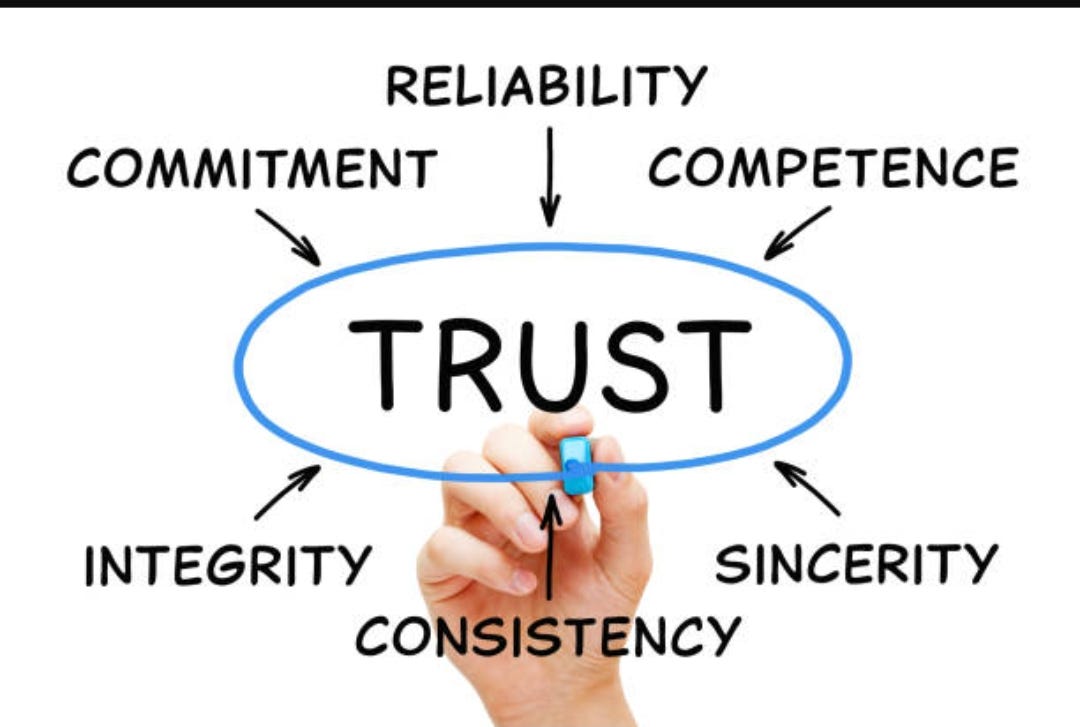
Trust is the most important tool we have in life, in every area. Nothing works without it.
Trust, by many definitions, refers to entering into a state of vulnerability with the potential of being hurt.
This is because trust is the vehicle through which we receive what we need. It always involves two parties: you and the person you are trusting. It’s a relationship. You are part of the equation as well. It is never only about the other person and their trustworthiness. It is always about both of us: the “other” and “me.”
Someone can be trustworthy, yet we may not be able to trust them. This is because trust issues are not always on the other side of a relationship. Sometimes we stand in the way of trust; our issues—not theirs—are the problem. Trust issues can destroy a person’s life.
Every day, people can move away from or even blow up relationships and businesses because they lack the ability to trust a person or an entity.
We trust when we feel someone really understands what we need, who we are, what hurts us, what helps us, and other things that are important to us. Understanding is the most foundational element of trust.
To trust is to believe that someone is good and honest and will not harm you.
without basic character traits of honesty, transparency, lack of duplicity (being the same person in public and private), responsibility, high morals, and others, we cannot have trust.
It is not what you give to anybody you meet on the street, cause it's so fragile, it has to be earned. And once broken, it is almost irreparable and beyond salvation.
So when it comes to this issue of trust, try to be extra careful and look for credibility and perpetual dependability in this person who is trying to earn your trust. This is because once it is broken, it is very difficult to go back to that place in which he or she has earned your trust and if you are not careful, it may make you lose potential useful relationships because you are biased from the stigma of the broken trust of the past.
You become so unusually guarded and almost inaccessible. This is why you shouldn't rush into a relationship or business with just anyone, rather you should learn to take your time and know them intimately through the passage of time. And the passage of time isn't enough to trust someone, I say this cause I too have been a victim of broken trust also.
Trust broken is like a mirror that is dashed on the floor which can never be repaired again.
We can become better and better at knowing who is trustworthy and who is not. And we can get better at deciding when and with whom we will put ourselves at risk.
Trust is the fuel for all of life. Nothing in life works without it—especially relationships. We are wired biologically, neurologically, emotionally, spiritually, and psychologically to trust. Trust is the currency that drives everything. So we need to be good at it.
Trust is a function of a level of depth. You can't trust someone without fully understanding the person in the first place.
Trust is beneficial when it goes well, and very painful when it doesn’t.
Being trustworthy and being able to trust others means everything. Knowing whom to trust and how to trust will drastically impact every area of your life in astonishing and positive ways. The process of trust is also a journey of self-discovery.
Understanding has emotional, psychological, physical, and communication components. It is a lifelong skill that begins in infancy and develops throughout our lives as we grow more in being connected to others and their experiences. It takes time to reveal who people really are.
The list of ways humans can betray one another is almost infinite, but the pain is always the same: hurt, betrayal, disillusionment, anger, withdrawal from trusting others, reticence in future transactions, suspicion, and more.
In short, when trust is broken and we are betrayed, we suffer.Trust is a familiar word and a familiar concept. We know what it means and when it’s working for us. We also know, sometimes in agony, when it gets broken. Trust is the currency that brings those feelings about in our lives. It is feeling safe—plus security that we can rely on someone to deliver what we need in several ways.
Learning to know when trust is available is a great skill to hone. It is possible for someone to understand you well, and still not be a person you should trust. Real trust is built not only through understanding but making sure the other party’s motive is right, meaning that they are for your good.
While trust often begins with a feeling, it can’t only be based on a feeling, an emotion, or some kind of sense. It has to be rooted in more solid, observable, essential qualities. We are easily tempted to think that trust is simple, that we ought to be able to quickly spot a lack of trustworthiness.
Trust builds bonds, deepens them, and can call forth our greatest faithfulness. When we trust, life works. When trust is high, it gets all the juices flowing and everything runs well. When trust is low—well, you know what that’s like. When trust is broken, things are even worse.
Real trust transcends “moral codes,” or “duty codes,” in a powerful way.
Trust says that your intent is for me as much as it is for yourself. People who are comfortable with their imperfections are the ones who do well in trust.
Trust built on empathy reduces anxiety across virtually all dimensions of life. Trust in surgical teams leads to better results and greater learning curves. Business marketing effectiveness is built upon the ability to create trust, and brand loyalty depends on it. Trust can be both positive and negative.
Human beings are naturally predisposed to trust—it’s in our genes and our childhood learning—and by and large it’s a survival mechanism that has served our species well. Our willingness to trust often gets us into trouble. We sometimes have difficulty distinguishing trustworthy people from untrustworthy ones.
Trust goes far beyond honesty or ethics. It’s about much more than knowing whether or not someone will lie to you. Trust is the confidence that someone will guard what is important to you, what you need, possess, or desire.
Leading someone to trust you does not begin with convincing them that you are right. For you to trust that someone will do what you need in a relationship, you have to feel they really make an effort to listen and understand your needs. You need to feel that they know what it feels like to be you in whatever you are doing.
Trust is not simply given, it’s earned. People must show us they are worthy of it, and that only happens through incremental performance over time. Not being part of someone’s history does not negate that building a track record took time. Time is still a factor, even if you were not there.
The fact that people are connected does not mean that one person controls the other, leaving him or her with no choices. The fear of being controlled and losing freedom can be a huge barrier to trust.
When we find ourselves struggling to trust, the problem isn’t always that the other person or entity is not trustworthy. Sometimes the issue is in the person who has to do the trusting.
Trust may not always develop via an incremental, evaluative process. Social and relational cues may have a strong but subtle impact on people’s important financial and management choices.

We often trust people based on a referral, or an association. And those are very important. They can validate someone’s abilities, as long as they include the knowledge of a real track record in the way that we are going to trust them.
We can never act in ways that cause someone to trust us if we do not understand what they feel, think, need, desire, and fear. When we fail to understand someone at a deep level, we unknowingly communicate that we are only interested in ourselves.
One of the most powerful drivers of trust is knowing that someone’s motive is rooted in a higher calling principle or value that transcends their own interests.
Sometimes, listening is all people want anyway and nothing more is needed. Few things are more frustrating than not being heard when something is important to us.
When we know someone, we learn what they like, what they need, and what they desire, and very importantly, we learn what hurts them.
Trust is a bond, an attachment, and no matter whether a breach of trust happens in a personal relationship or a business context, it can strike the heart the same way.
People make big trust decisions because they already trust someone in many ways. You do not have to trust people. If you do, it should only be because they have earned it.
At a species level, that doesn’t matter very much so long as more people are trustworthy than not. At the individual level, though, it can be a real problem. Trust at the individual level can definitely be a real problem. You don’t trust people in a much more personal way, and that usually comes from having had some bad experiences somewhere in life.
I know you have been hurt in the past, but you can still choose deliberately to heal and trust someone, because it's been scientifically proven that you are only three people away from the next level of your life. But what if the person that will act as a bridge to the other two people has broken your trust, how then do you move to the next phase of your life?(this is a question you stop and really dwell upon.)
Therefore choose to trust today and you will realize that there are still lots of trustworthy people out there waiting to welcome you with open arms.
Thanks alot for your time.
Chiaoooo. Gracias….
This is very interesting and I strongly agree with you. This has encouraged me not to break the trust(s) I have earned.